WHY REGISTER with HCA Registries
№ 1. Added Value
When breeding and selling seedstock, even if it’s only one calf a year, a registry serves as a 3rd party that identifies and documents exactly what breed(s) and bloodlines a registered animal has in its pedigree. Registration cannot improve an animal’s quality, it will significantly increase a quality animal’s value. A prospective buyer can see immediately which other breed(s) are in its background, and as well as which bloodline(s) it carries. That can help indicate which traits, strengths or weaknesses the animal may have, as well as indicate which DNA tests may be called for.
№ 2. Animal ID
A Registration Certificate helps with animal identification. It can be used for transport, export, veterinary CVI (health certificates), genetics (semen or embryo transfer) collection, public breed exhibition, and helps establish ownership in cases of loss or theft.
№ 3. Documentation for Upgrading
Even crossbred cattle that are less than 37.5% purebred can be recorded (as opposed to being registered) as foundation breeding cattle. This lends credibility by providing important genetic breed information in composite development or for future purebred grading up programs.
№ 4. Animals Register for Life
All cattle in HCA Herd Books, (Homestead, Miniature, Belfair & USNO registries) receive registration certificates that honor & include their original registration name and number if previously registered in another country or by another legitimate registry. For example: USNO uses French bred Normande cattle’s original registration numbers originally issued by OS Normade in France, in all animals' recorded pedigrees.
№ 5. International I.D. numbers
Along with a registration number issued by their herd book, all animals registered by HCA registries are also issued international ID numbers. The international ID № is prefaced with a globally recognized cattle breed code, as well as their country of origin (COO), the code for the state or province they were born in, and their year of birth (when known). With these international ID numbers, all original registration numbers (issued by other registries) are kept intact; yet prefaced with the same internationally recognized ID number prefixes. This can bring an advantage when collecting frozen genetics, or when exporting cattle or genetics across borders or to other countries. It can also be an advantage when entering cattle in major shows or public exhibition venues.
№ 6. Breed Composition Identification
All cattle on Homestead, Miniature, Belfair or USNO registration certificates are accurately identified with their true breed percentage as known, with their complete breed composition documented on their papers. This verifies the purity of established and evolving breeds, and assists breeders when managing the genetics in their herd. This also protects the integrity of 100% fullblood breeds of cattle—by never allowing upgrades to be categorized as 100% breed cattle. For example: USNO does not recognize any polled cattle as 100% fullblood Normandes. Read HERE about the introduction of polled genetics into the Normande breed. All HCA herd book registries are dedicated to keeping fullblood genetics properly identified and safely preserved for posterity.
№ 7. USNO Dual Purpose Philosophy
The USNO registry promotes & protects the Normande breed as a dual (or multiple) purpose breed, as it is in France, its country of origin. USNO does not ask breeders to choose between dairy or beef type Normande traits when registering their cattle. USNO does not police trait selection; leaving that up to the breeder.
Normande Section
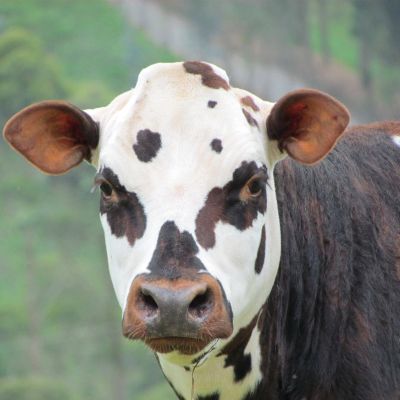
Normande Colors
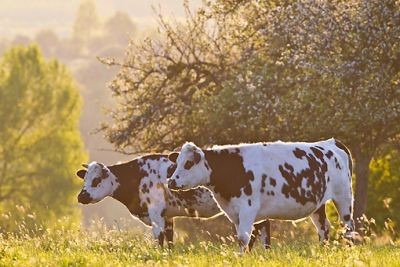
The Normande is a homozygous red & white breed of cattle. There are 4 different names for Normande color variations used in registration. Recognized Normande colors are:
- Quail
- Blond (the original French spelling)
- Brindle and
- Mahogany
Calves do not typically display their brindle striping or their very dark mahogany coat colors until they shed their calf coat. Generally, Normande cattle tend to darken as they age. Some, especially bulls can appear black.
Normandes are characterized by pigmentation on the ears, noses and around the eyes. They should also have pigment over the scrotum and teats. This color trait is essential to the health of the cattle, and is passed on to crossbreds in F1 crosses, making them ideal for crossbreeding. Eye goggles, pigment around ear edges and on the nose helps prevent cancer. It is a registration requirement for Fullblood and Purebred Normandes, and is critical when selecting breeding stock. Pigment on the udder, teats, and scrotum is not required for registration, but should be selected for.
USNO Normande Section: Normande Colors
Quail
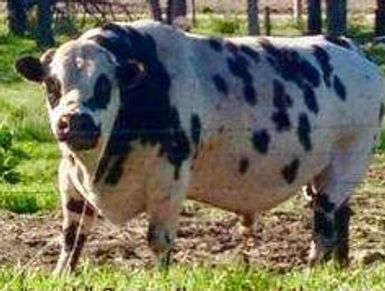
Quail ("blanc," or white)
Cattle that are mostly white, with speckling or spotting of color over the body.
photo: fullblood Normande bull OBR Firecracker 1X USNO NOUSA47XNANA05228
Blonde
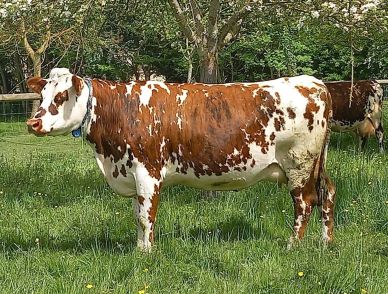
"Blond" (blonde, fawn, or red)
Blond: Cattle that have larger spots or patches of color that cover most of the body—when coat color appears predominantly blonde, fawn, or red in color. Most of the underpinning area remains white.
photo: Laurent Duval France
Brindle
Mahogany

Brindle (tiger striped)
Brindle cattle have spots or patches of color that cover most of the body—and their coat color appears predominantly brindle (or tiger striped) in color. Most of the underpinning areas remain white.
photo: INRAA VEILLE SCIENTIFIQUE Élevage laitier La Normande Une vache tout terrain normande1 inraa-veille blog
Mahogany
Mahogany

Mahogany: Normande cattle that have spots or patches of color that cover most of the body with coat color that appears predominantly mahogany brown, mulberry or sometimes even appearing black in color. Some of the underpinning area usually remains white. Mahogany is an age progressing coat color in Normandes.
photo: OBR Snagglepuss, a USNO registered Normande bull.
Mahogany

Fullblood mahogany Normandes, even if they appear black are still red (genetically).
photo: JAZX Polled Dancer USNO NOUSA47ANANA05867
Trouted
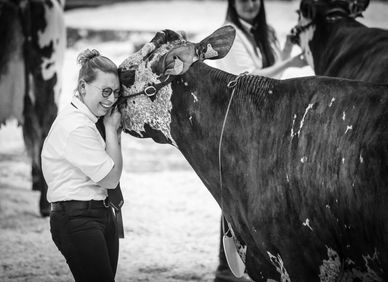
Trouted: Any color Normande can be trouted; which is when they display additional pigment, spots or speckling on the skin that shows under their white hair.